
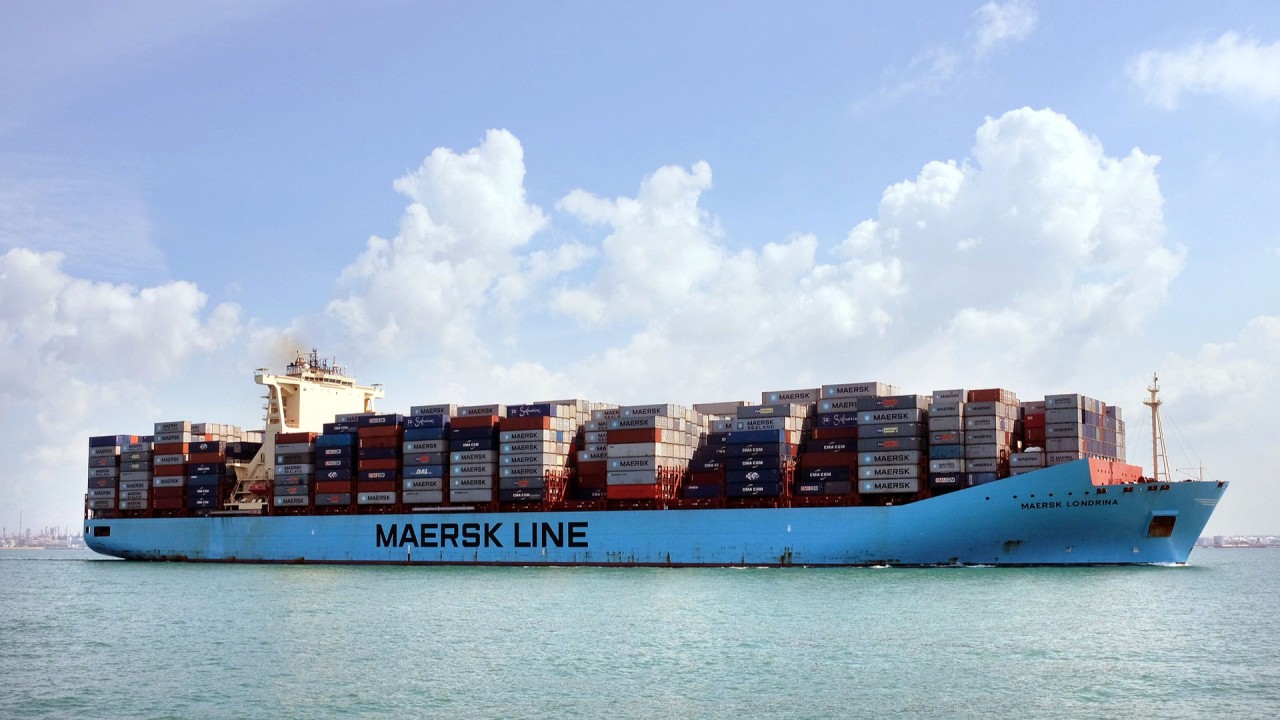
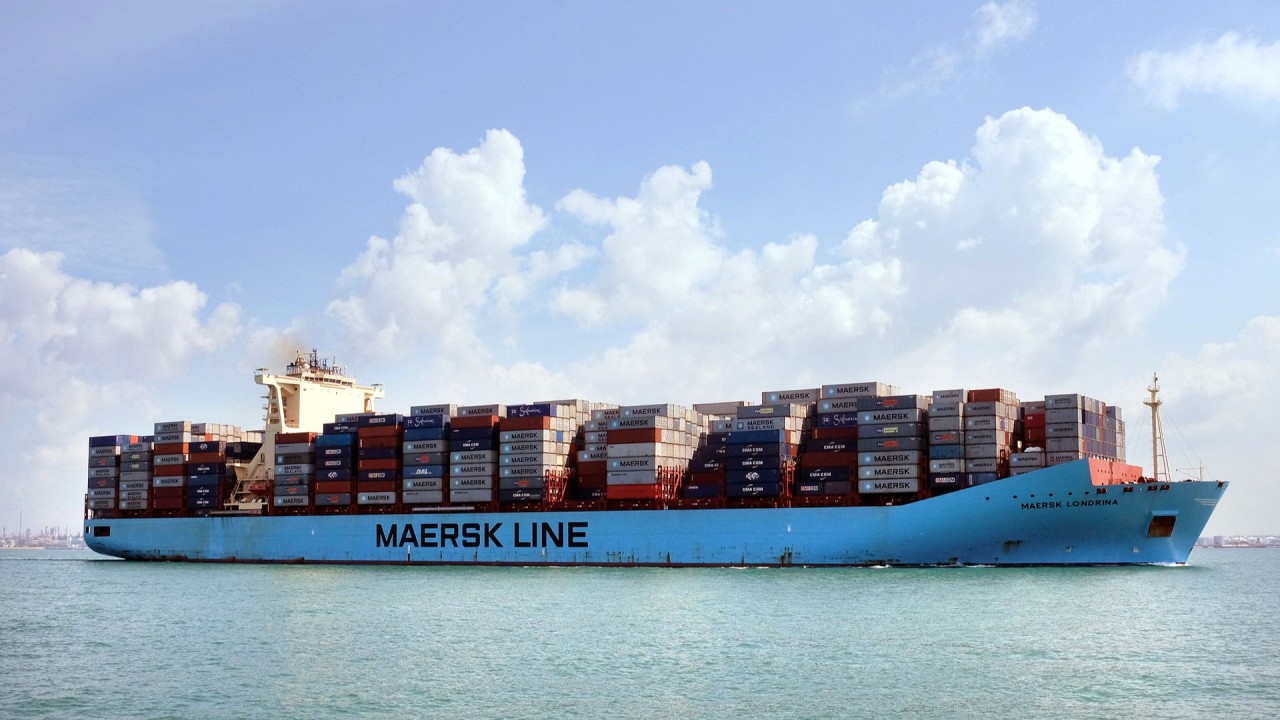
"Maersk Londrina container ship (14783601347).jpg" — Public domain: Use pics for any purpose — Source: Wikimedia Commons
Return through the Red Sea: Maersk is once again focusing on the Suez Corridor – and Egypt's ports are coming into focus
 David Weber
After more than two years in which large parts of container shipping diverted around the Cape of Good Hope, a cautious comeback of the Suez / Red Sea corridor is emerging at the beginning of 2026.
The main drivers are changes in the security situation and the political environment—including a (fragile) easing of tensions that is motivating many shipping lines to at least conduct trial voyages. Within this context, a move is taking place that is widely understood in the industry as a signal: Maersk is once again structurally routing an initial liner service via the Suez Canal.
After more than two years in which large parts of container shipping diverted around the Cape of Good Hope, a cautious comeback of the Suez / Red Sea corridor is emerging at the beginning of 2026. The main drivers are changes in the security situation and the political environment—including a (fragile) easing of tensions that is motivating many shipping lines to at least conduct trial voyages. Within this context, a move is taking place that is widely understood in the industry as a signal: Maersk is once again structurally routing an initial liner service via the Suez Canal.
What Maersk has decided— and what it has not
Maersk is not speaking of a “full return” of all East–West trades, but rather of an initial structural adjustment: the MECL service (Middle East and India – US East Coast) will once again be routed via the Red Sea / Bab al-Mandab / Suez route—subject to continued stability.
What is important here: this is not a one-off exception voyage, but a change to the regular sailing schedule of this service.
- Maersk cites two previously successful trans-Suez transits (including Maersk Sebarok and Maersk Denver) as the basis for the decision.
- According to Maersk, the first westbound voyage under the new MECL structure is the Cornelia Maersk (Voyage 603W), departing Jebel Ali (UAE) on 15 January 2026.
- The first eastbound voyage is expected to be the Maersk Detroit (Voyage 602E), which departed North Charleston on 10 January 2026.
At the same time, Maersk repeatedly emphasizes that safety remains the top priority and that, in the event of a deterioration in conditions, the company could revert to the Cape route (contingency plans).

"Ships entering and leaving the Suez Canal at Great Bitter Lake, Egypt (46023529944).jpg - Sentinel Hub - Source: Wikimedia Commons
Why Suez vs. Cape is such a major lever for transit time, capacity, and rates
At its core, the issue is simple: Suez saves time. Many analyses cite—depending on the trade—up to two weeks shorter transit times compared with routing around Africa.
This is not merely a “nice-to-have,” but fundamentally changes the system logic of liner networks: fewer days per round voyage mean fewer ships are required to maintain the same frequency.
Some concrete implications:
- Reduced fleet requirements: In this context, Xeneta cites estimates suggesting that, in the event of a broad return, a noticeable portion of the global container fleet could become “redundant” (effectively acting as a capacity increase in the market).
- Pressure on freight rates: When more effective capacity becomes available, the balance of power tends to shift away from carriers toward shippers—resulting in downward price pressure. This expectation is also reflected in market reactions.
- Supply-chain advantages (“transit time” in daily operations): Shorter transit times mean less capital tied up “on the water,” faster cargo availability, and in many cases improved planning reliability—provided that new congestion does not arise due to schedule shifts.
A good example is CMA CGM: for the INDAMEX service (India/Pakistan ↔ US East Coast), Xeneta calculates that returning via Suez reduces the round-trip duration by two weeks (to 77 days)—allowing two vessels to be removed from the service.
What are the other major shipping lines doing?
This is where it gets interesting: the industry is not acting in unison, but across different risk levels.
CMA CGM
CMA CGM has been one of the more proactive testers in recent months. At the end of December 2025, large vessels such as the CMA CGM Jacques Saade and CMA CGM Adonis were reported transiting Suez—a strong signal, as the largest vessels in particular had long avoided the route.
In parallel, CMA CGM has announced the structural adjustments for INDAMEX mentioned above.
Hapag-Lloyd
Since late 2025, Hapag-Lloyd has communicated a very clear position: no fixed return date, close monitoring, and if a return occurs, it will be orderly and phased (with a transition window of 60–90 days mentioned).
ONE (Ocean Network Express)
ONE is a good example of why “Red Sea” does not automatically mean “Suez.” ONE has announced a new Red Sea China Service (RCS):
Shanghai – Qingdao – Nansha – Shekou – Jeddah – Sokhna – Aqaba – (back via Jeddah) – Shanghai – Qingdao.
The launch vessel is the SSF DREAM, with service starting in mid-January 2026. At the same time, it is emphasized that the service does not transit the Suez Canal—it directly connects China with Red Sea ports and remains within the Red Sea region.
MSC and the “big return” overall
Drewry data suggests that large carriers (including MSC) are increasingly sending individual larger vessels through Suez again—but volumes remain well below previous normal levels.
And Egypt? Ports, terminals—and who is actually calling
For Egypt, two things are simultaneously true:
- Suez is transit: many vessels pass “through Egypt” without calling at an Egyptian port.
- Egyptian ports still benefit—as import/export gateways and as transshipment hubs in a region that is once again being served more intensively.
A current infrastructure milestone is the launch of the new terminal in Ain Sokhna: according to Egyptian reports, the CMA CGM IRON berthed at the new facility during its commissioning (arriving from Beirut with around 13,000 containers on board).
AIS snapshot: Which container ships are calling in Egypt (as of 19 January 2026)?
For orientation purposes—based on AIS lists (VesselFinder), a snapshot that can change at any time:
- Port Said: including Maersk Cincinnati, Maersk Hong Kong, MSC Josseline, CMA CGM Pelleas.
- Alexandria: including CMA CGM Grace Bay, CMA CGM Musset, Paya Lebar.
- Sokhna: including Wan Hai 313, Chang Shun Jin Xiu, Istanbul Bridge (container ship).
What this means for 2026
In short: the corridor is back “in play,” but not yet “business as usual.”
Maersk’s MECL decision represents a structural step, CMA CGM is in some respects moving even faster, while Hapag-Lloyd remains cautious and ONE is focusing on regional connectivity with new Red Sea services.
At the same time, market data shows that Suez transits are increasing (e.g., 26 container ships last week), but still remain significantly below historical levels.
For shippers, the key takeaway is this: if the situation stabilizes, shorter transit times and downward price pressure are realistic—but the return will likely be gradual, allowing networks, ports, and insurance frameworks to adjust accordingly.
Sources:
- 1) Financial Times (15.01.2026): “Maersk resumes shipping through Red Sea after ceasefire” https://www.ft.com/content/b8256a46-f99f-458d-8b1f-ba3f99656a17
- 2) Maersk (15.01.2026): “Maersk’s MECL service returns to trans-Suez route” https://www.maersk.com/news/articles/2026/01/15/maersk-mecl-service-returns-trans-suez-route
- 3) Reuters (15.01.2026): “Maersk to resume Suez Canal sailings for MECL service” https://www.reuters.com/world/middle-east/maersk-resume-suez-canal-sailings-mecl-service-2026-01-15/
- 4) Xeneta (05.12.2025): “Return of container ships to Red Sea edges closer … (INDAMEX via Suez)” https://www.xeneta.com/news/return-of-container-ships-to-red-sea-edges-closer-major-carrier-announces-new-full-loop-service-via-suez-canal
- 5) Xeneta (13.01.2026): “MAERSK DENVER is about to complete a Suez Canal transit for Maersk, more will follow” https://www.xeneta.com/news/maersk-denver-is-about-to-complete-a-suez-canal-transit-for-maersk-more-will-follow
- 6) Hapag-Lloyd: “Statements and Updates” (Press Statements) https://www.hapag-lloyd.com/en/company/press/press-statements.html
- 7) Port Technology (16.12.2025): “ONE launches new Red-Sea-China service” https://www.porttechnology.org/news/one-launches-new-red-sea-china-service/
- 8) FreightWaves (17.12.2025): “ONE returns to Red Sea with new service” https://www.freightwaves.com/news/one-returns-to-red-sea-with-new-service
- 9) Drewry (13.01.2026): “Suez route voyages recover; Drewry launches Red Sea Diversion Tracker” https://www.drewry.co.uk/news/news/suez-route-voyages-recover-drewry-launches-red-sea-diversion-tracker
- 10) Safety4Sea (14.01.2026): “Drewry: Suez Canal container traffic hits five-week high” https://safety4sea.com/drewry-suez-canal-container-traffic-hits-five-week-high/
- 11) Egypt Today (15.01.2026): “Egypt launches commercial operations of Red Sea Container Terminal 1 …” https://www.egypttoday.com/Article/1/144497/Egypt-launches-commercial-operations-of-Red-Sea-Container-Terminal-1
- 12) VesselFinder (AIS-Daten, dynamisch; Abruf: 22.01.2026) – Port-Seiten / Schiffslisten (Momentaufnahme)
- - Alexandria (EGALY) https://www.vesselfinder.com/ports/EGALY001
- - Port Said (EGPSD) https://www.vesselfinder.com/ports/EGPSD001
- - Sokhna (EGSOK) https://www.vesselfinder.com/ports/EGSOK001